
Why Trust Is Replacing “Fresh” as the Core Produce Marketing Message in 2026
For decades, fresh produce marketing has relied on a familiar set of promises: fresh, local, sustainable, high quality. Those words still matter but in 2026, they are (unfortunately) no longer enough.
Across retail, foodservice, and commissary channels, buyers and consumers are navigating general volatility with pricing pressure, labor uncertainty, supply chain disruption, and growing skepticism toward marketing claims that feel interchangeable.
As a result, the emotional driver behind purchasing decisions is shifting.
Today, the winning produce brands are not the ones shouting freshness the loudest. They are the ones quietly building and signaling confidence. If it seems like I’ve been shouting about “trust” from the rooftops a lot lately, it’s because I have done just that. Marketers, in 2026 we must finally dig in and build that trust that today’s consumer is no longer willing to wait to have with your brand.
“Fresh” Has Become a Commodity Claim
Sorry, but I’m not sorry. Walk any trade show floor or scan produce brand websites and social feeds, and you’ll see the same language repeated over and over again. Everyone in the fresh space is just that, “fresh.” Everyone is committed to quality. Everyone values sustainability.
When everyone says the same thing, those words lose their power. I cannot stress this enough.
At the same time, retail and foodservice buyers are under increased pressure to justify decisions internally. Relationships still matter, but they are no longer sufficient on their own. Buyers need to reduce risk, protect margins, and demonstrate consistency in an unpredictable environment.
For consumers, inflation fatigue and information overload have created a similar response: less patience for vague promises and more desire for reassurance that a product will deliver what it claims.
The result is a growing gap between traditional produce marketing and what the market actually needs.
Fresh Produce Marketing Is Entering Its “Proof Era”
In 2026, fresh produce marketing will move from storytelling alone into a new phase where proof, transparency, and operational credibility take center stage.
Make no mistake, this does not mean brands should abandon emotion or brand personality. It means that emotional connection now flows through evidence, not aspiration.
Confidence-building signals should replace broad claims. As marketers, we are in the right seat at the right time to ship these signals with our marketing deliverables and support of our internal sales teams.
Here’s what I recommend:
- Set clear explanations of how quality is protected from field to shelf
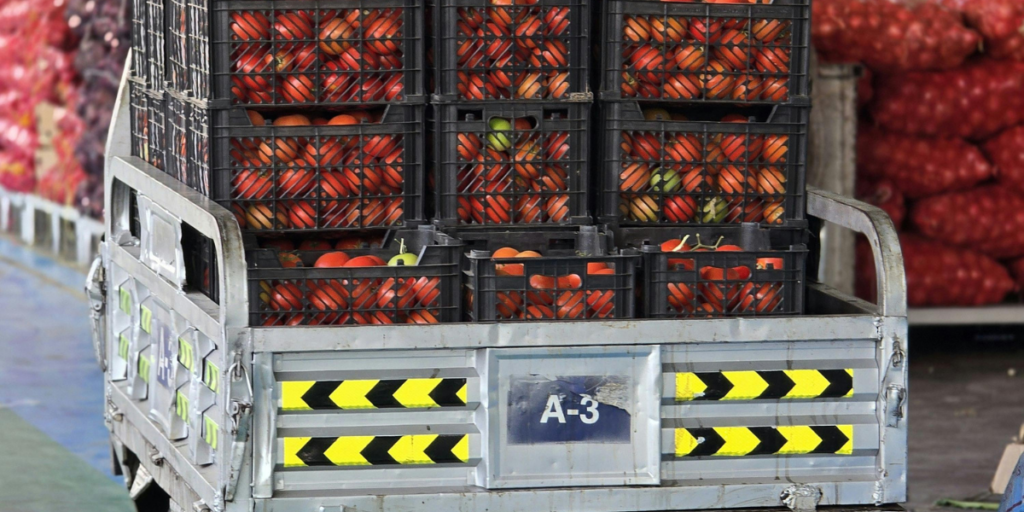
- Bring visibility into sourcing, handling, and cold chain practices – think photos, videos, stories
- Talk with specifics around food safety, labor continuity, and supplier standards – don’t just use buzzwords. Actually, explain what you mean by “food safety measures”.
- Demonstrate consistency over time, not one-off moments of excellence. Showcase feedback you receive from your customers and/or consumers. I know you all receive handwritten letters from consumers, imagine how that might serve as trust building social media or website or sales deck content.
What Buyers and Consumers Actually Trust Right Now
This is a fair question! If I suggest that we’re needing to ramp up the trustworthy language and presentation of our products and/or services, then what exactly is working to build trust right now amongst our target audiences?
While people have different motivations, buyers and consumers are converging around the same need: reduced uncertainty. After working on several messaging guides for businesses in the second half of 2025, I can tell you this is absolutely certain.
Right now, retail and foodservice buyers trust:
- Predictability in supply and specifications you can delivery on again and again
- Operational clarity that reduces risk – show them behind the curtain a bit
- Partners who can articulate systems, not just values – values have gotten us so far, but now we need to bring the message home with PROOF points!
- Brands that make their jobs easier during disruption – we likely have some work to do after the tariff hustle and bustle of 2025 to regain trust and get in alignment with our customers.
And at the same time, consumers build trust right now with brands who employ:
- Specific language over marketing slogans – if you’re going to pitch a slogan, follow it up with an explanation we can all understand.
- Education that helps them make informed choices – this is where nutritional benefits (also health related benefits) lead to real life benefits for consumers.
- Acknowledgement of complexity rather than gloss over it – let’s just tell the truth.
- Transparency that feels practical, not performative – again, the only way to build a coveted trusting relationship with a shopper is to tell the truth and deliver over and over again.
What’s fun is that for both audiences, trust is earned through demonstration, not declaration.
What You Can and Should Do About it Now
This shift has real implications for how we, as fresh produce marketers and brands communicate.
Marketing strategies that once leaned heavily on lifestyle imagery and generic claims must now evolve to include:
- Content that explains processes, not just outcomes – stay tuned for more examples of this from our team in the VERY near future!
- Social and digital storytelling that shows behind-the-scenes reality – grab your smart phone and gather “real” content that serves humanity and business realness. It doesn’t have to be perfect – it just needs to be believable and real.
- Websites that highlight systems, safeguards, and standards – this is the moment we’ve been waiting for! Now is the time in our careers when “going deep” into operations and exposing the realities of fresh produce businesses is going to be received by audiences who are hungry for it.
- Sales materials that equip teams with concrete proof points – you can’t get too specific with your performance markers for any given customer for any given product. Know your stuff and you will be rewarded with more business.
This is not about overwhelming audiences with data. It’s about being specific enough to be believable. When produce marketing aligns with operational truth, it builds credibility that compounds over time.
A Quieter, Stronger Competitive Advantage
Most produce brands will continue to market the way they always have because it feels safe and familiar.
That creates an opportunity.
Brands that adapt early will sound calmer, clearer, and more confident in a noisy market. They will attract buyers looking for partners, not just suppliers. And they will earn consumer trust by helping people feel informed rather than persuaded.
Starting In 2026, the strongest produce brands will not rely on buzzwords to stand out. They will stand out because they make confidence visible.